



What is ‘Textiles Technology’ ?
Textiles’ in years 7, 8 and 9 gives you a good foundation of knowledge relating to how garments are put together and what materials are best used to make them. Soft toys are popular with young children but what shapes are possible and what might be a popular toy if it were to go into production and be made by a toy manufacturer. You should end each project with a completed item and a design folio.
How can different fabrics be made to have waterproof qualities and yet still allow you to keep cool ? Textile technology draws on knowledge of new materials as well as science.
Any comments or contributions regarding this website




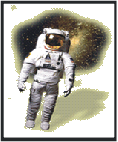
particle penetrating the suit, the construction of the suit needs to incorporate communications features and this isn’t so different from the coat and jacket requirements of today. Controlling the environment in a spacesuit is not that different from the needs that medical teams that have o create a stable ‘local environment’ for particular patients.
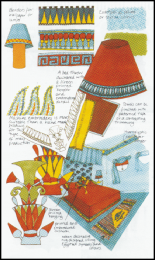
All the GCSE options in Design and Technology will benefit from good presentation skills. It is always important to develop the skills that allow for clear communication in the early years of studying Design & Technology. The use of colour, space and interesting text also has a significant place in the presentation of coursework and you should try to make all work look attractive ‘by the page’. Look at the Graphic Products section of these pages and also use
the knowledge and skills you have already gained in other subjects such as Art.
For a reminder about print processes and colour theory check the page marked COLOUR
The most recent developments are the SMART
textiles. These are materials that can respond to
An external stimulus and the uses for such
products are really only restricted by the designers’
imaginations.
the knowledge and skills you have already gained in other subjects such as Art.
For a reminder about print processes and colour theory check the page marked COLOUR
The most recent developments are the SMART
textiles. These are materials that can respond to
An external stimulus and the uses for such
products are really only restricted by the designers’
imaginations.

Photos & artwork Illustrations taken from Recommended book :
“Design & Make It – Textiles Technology”
“Design & Make It – Textiles Technology”
| Drawing Conventions | Modelling techniques with card | Paper Sizes and Weights l
l KS3 l Anthropometrics & Ergonomics | Colour Theory & printing |
Guide to Board prices l Tessellation and NETS l Graphics Revision |
Graphics Revision DTOTW | Controlled task Tips l Card modelling FAQ l
Mechanisms Revision
l KS3 l Anthropometrics & Ergonomics | Colour Theory & printing |
Guide to Board prices l Tessellation and NETS l Graphics Revision |
Graphics Revision DTOTW | Controlled task Tips l Card modelling FAQ l
Mechanisms Revision
McArthur, Etchells & Shephard ISBN 0-7487-2471-0

Why donate ?


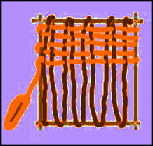
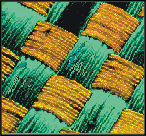
The equipment used in weaving has developed as the under-standing of the process and the materials has improved too.
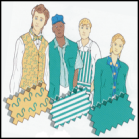
Corporate identity is a feature of many modern organisations and the image presented to the world can be in the hands of
fashion and textile designers. An image that lacks the ‘right
look’ can do harm to the company and a great deal of time
and expense can go into getting everything right. As much
as a distinctive style, the understanding and subsequent
choice of colours can contribute a lot to success.
fashion and textile designers. An image that lacks the ‘right
look’ can do harm to the company and a great deal of time
and expense can go into getting everything right. As much
as a distinctive style, the understanding and subsequent
choice of colours can contribute a lot to success.
Whilst you won’t make space suits in your textiles course you will learn about materials and their use in fashion, furnishings and in the environment of interior design.
At the heart of all textiles is the way in which they are constructed and the fibres that are used in their construction.
Weaving is a technique that goes back to very early societies and can be done in a few different ways.
At the heart of all textiles is the way in which they are constructed and the fibres that are used in their construction.
Weaving is a technique that goes back to very early societies and can be done in a few different ways.
The classic example of a complicated arrangement of materials designed to perform a special purpose would be the construction of a spacesuit. If a spacesuit were to have price tag placed on it then it would have to be several million dollars. A spacesuit has to be airtight, flexible and still strong enough to prevent tiny particles in space - travelling faster than a bullet - from piercing it and allowing the air to escape. Obviously a great deal of research goes into such suits. As well as being protection against air escaping and